Chat with us, powered by LiveChat
Home » Education Articles » K-12 Research Review
  • Title II Funding

Your Title II Money Is Coming in October. Here Is Why You Should Spend It This Year

September 4, 2026|

If you lead a school, you have probably spent the past two years watching federal education funding move in ways that are difficult to plan around. Title II, Part A was held back for most of July 2025. The Elementary and Secondary School Emergency Relief funds are gone. The administration has twice proposed eliminating Title II-A, and a House committee bill would end the program for 2027-28 and rescind part of this year’s money. This makes it reasonable for you to wonder whether the professional development you planned in August is safe to schedule in October. This article walks through what has been enacted, what remains a proposal, when your money arrives, how long you have to spend it, and the three planning decisions that protect your school no matter how the next appropriations cycle ends.

  • Operant Conditioning in the Classroom

Skinner’s Theory of Operant Conditioning in the Classroom

August 12, 2026|

You have likely used, or seen, teachers transform and improve behaviors using a simple sticker chart as a rewards system. You might have also seen how a student’s behavior improves after you focus on providing consistent and specific praise. Positive and negative behaviors in your classroom don’t typically come out of nowhere, and much of what your students do is actually shaped by what happens before they do it and whether the behavior is followed by something like a reward, a consequence, or a specific action. One well-studied framework for understanding student behaviors comes from B.F. Skinner’s theory of operant conditioning, which describes how what comes after the behavior is what makes that behavior more or less likely to happen. In this article, you will learn about operant conditioning and why it can be beneficial to understand in your classroom.

  • Instructional Teaching Strategies

Instructional Strategies and Teaching Strategies in Your Classroom

July 31, 2026|

Instructional strategies are research-based methods that teachers use to deliver content to students and improve their instructional practice. But it also goes further than that, because by combining classroom management strategies, assessment strategies, and other brain-based and memory-based strategies to support students, they all work together to improve the classroom and increase learning. This article serves as a resource to understand how strong instructional and other teaching strategies translate to student success in your classroom. (Read more)

  • Levels of Processing Theory

The Levels of Processing Theory

May 21, 2026|

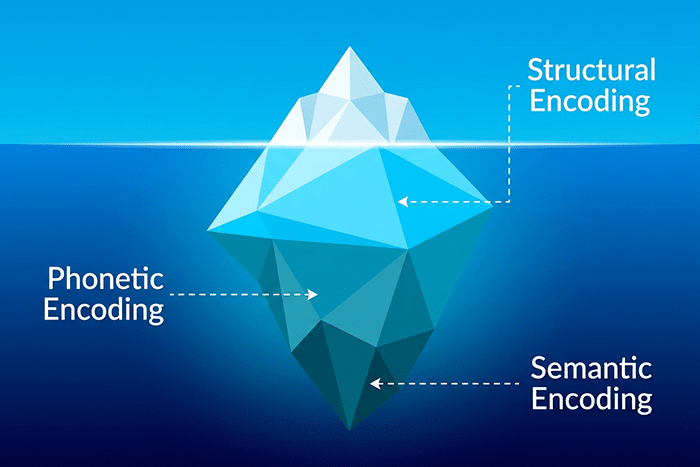
Have your students ever come into your classroom, insisting they studied and prepared for an upcoming test, yet they don’t perform nearly as well as you’d expect? While there are several reasons this could occur, one is that your students were not effectively retaining concepts to recall and apply them on an assessment. In this article, you will first learn about the three core processes of memory: encoding, storage, and retrieval, and discover briefly how those processes work together to help support learning and memory. Then, you will be introduced to one of many theories on memory, the Levels of Processing Theory, which describes how the level of processing concepts and ideas can dictate how strong your memory is.

  • Supporting Reading Struggles

Understanding Students with Reading Struggles

May 5, 2026|

All teachers, not only reading teachers, can benefit from understanding how students may struggle in reading, in order to better support them in the classroom. While the reading teacher is the primary educator focused on teaching students to read, all teachers across all content areas must be mindful of students’ reading difficulties. Reading is essential to comprehension, and all teachers have a responsibility to ensure that students learn to the fullest extent in the classroom. However, some students struggle significantly more with reading than others. This article will provide you with an overview of what to consider as you encounter students in your class who may exhibit reading struggles, either due to a specific disability or due to other reading difficulties.

  • Kohlbergs Theory in Teaching

Understanding Kohlberg’s Theory of Moral Development and Why It’s Important for Teachers to Know

March 20, 2026|

As a teacher, you often witness your students struggling with the question of right or wrong each day in your classroom. How can I teach that student that it is important to share? Why did that other student share without being asked? Why is it that some children follow classroom rules when no one is watching, while others struggle to abide by classroom rules at all times? While some of the behaviors you witness may be due to a child’s personality and upbringing, you may also be noticing patterns of behavior aligned with their moral development.

  • Social Media Cognition in Children

Social Media and Cognitive Performance

October 16, 2025|

Social Media has long been on the radar as a significant concern for childhood development. Now, a new study tracking 6,554 adolescents has revealed some interesting insights into the effects of social media usage and cognitive development. In this article, we break down the study and summarize its key findings.

Your Shopping Cart

Name Price
Buying for a team or group? Select quantities on checkout page.