Chat with us, powered by LiveChat

Home  »  Education Articles  » Assessments
  • Instructional Teaching Strategies

Instructional Strategies and Teaching Strategies in Your Classroom

July 31, 2026|

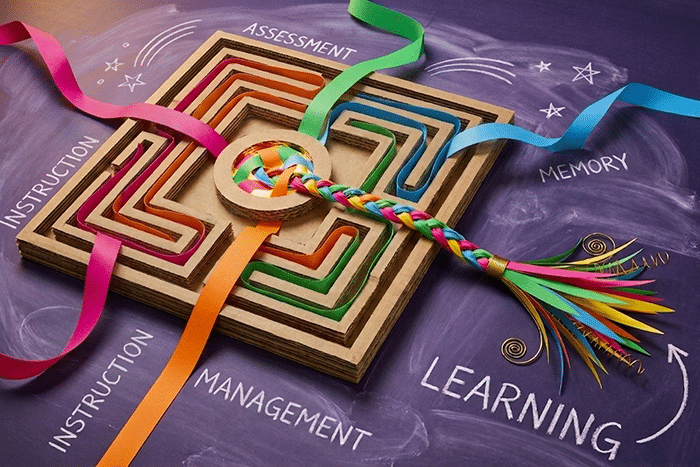
Instructional strategies are research-based methods that teachers use to deliver content to students and improve their instructional practice. But it also goes further than that, because by combining classroom management strategies, assessment strategies, and other brain-based and memory-based strategies to support students, they all work together to improve the classroom and increase learning. This article serves as a resource to understand how strong instructional and other teaching strategies translate to student success in your classroom. (Read more)

  • Model Teaching - Geography Study

Building Geography Knowledge: Retrieval Practice of Countries, Regions, and Geographical Features

June 24, 2026|

Imagine a middle school teacher finishes a unit on East Asia. Students had been working on identifying and locating physical and geographic features on a map, like landforms, bodies of water, and urban centers, as well as identifying the location of countries around the world. In this unit, the teacher described the region’s monsoon climate, and students learned why its rivers support a denser population than in other areas. While students are engaged in the content throughout the unit and analyze a map of the region as they discuss its features, they have a hard time identifying geographic features on their own. For example, when the teacher projects a blank map onto the board and asks students to identify the Yellow Sea or label countries like China, Japan, and North and South Korea, many students are unable to do so, even though they discussed these areas in class extensively. (Read More)

  • Levels of Processing Theory

The Levels of Processing Theory

May 21, 2026|

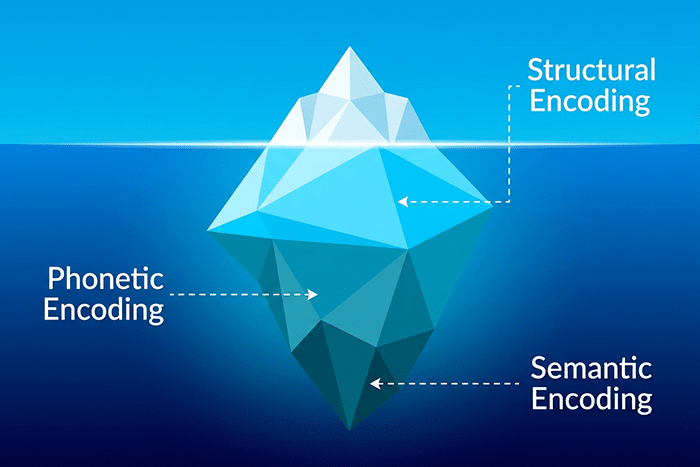
Have your students ever come into your classroom, insisting they studied and prepared for an upcoming test, yet they don’t perform nearly as well as you’d expect? While there are several reasons this could occur, one is that your students were not effectively retaining concepts to recall and apply them on an assessment. In this article, you will first learn about the three core processes of memory: encoding, storage, and retrieval, and discover briefly how those processes work together to help support learning and memory. Then, you will be introduced to one of many theories on memory, the Levels of Processing Theory, which describes how the level of processing concepts and ideas can dictate how strong your memory is.

  • Answering with Confidence Webinar

Webinar: Answering with Confidence

March 26, 2026|

Explore guidelines for teaching testing behaviors, testing strategies, and a process for students to justify their answer choices on assessments. You will learn specific behaviors or strategies to identify in students, as well as simple methods to explicitly teach appropriate testing behaviors.

  • Answer Justification

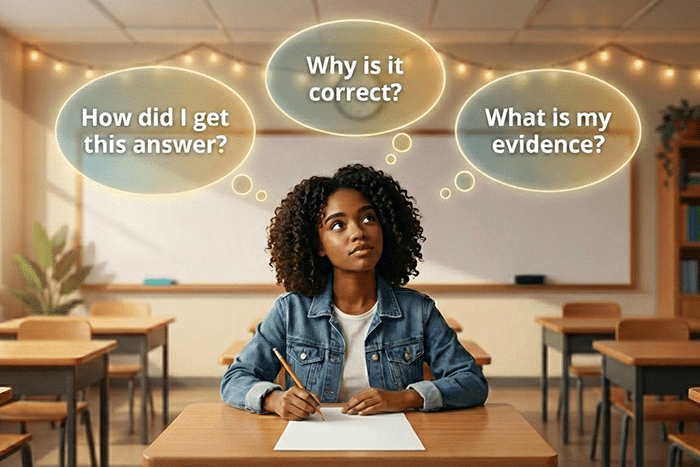
Use the Answer Justification Process to Improve Your Students’ Test-Taking Skills

February 12, 2026|

Test success is not just about students mastering content and then demonstrating it. Many students also need support in mastering specific testing behaviors that will increase the chance of their success on a test. Whether that is time management, a method for analyzing a question, or a method for selecting the correct multiple-choice option on tricky tests, testing behaviors can be improved and practiced in students as a way for them to truly demonstrate what they know and guarantee better success on assessments.

  • Fizzy Learning Geography

Using Geography Memorization as a Way to Master Historical Concepts

February 2, 2026|

In today’s history classroom, students are expected to analyze global conflicts, explain change over time, and understand the roots of major events. When students cannot locate countries on a map, history can feel abstract because they struggle to picture how borders, regions, and geography shape what happens. Intentional practice memorizing countries, cities, and regions helps students build that mental map so they can connect more deeply with history, current events, and global issues. This article explains why geography memorization matters and highlights technology tools that can support students as they learn these concepts.

  • AI Tools Classroom

AI Tools for The Classroom: A Review of Artificial Intelligence Tools for Teachers & Students

August 7, 2024|

AI stands for Artificial intelligence and is a branch of computer science that includes machines and computers programmed to function similarly to humans in terms of their "thinking" and learning. When combined with other technologies, AI can complete tasks previously only done by humans. In this article, we will review some of the key AI platforms available for teachers and students today, and discuss some ways they can be used to help increase your productivity and provide additional support for your students.

  • Student Feedback

A Formula for Student Feedback

March 23, 2023|

Your students need a model for improving their work; with timely and specific feedback, it will be easier for them to work to improve in certain areas. Student feedback identifies particular areas of student performance and provides insight into their strengths and weaknesses. Therefore, feedback should be a natural component of most assessment methods you provide in your classroom. This article will give you a brief set of steps to help you build timely and targeted student feedback.

  • 3-2-1 Strategy

The 3-2-1 Strategy to Check for Student Understanding

January 3, 2023|

Ideas and strategies to check for student understanding are plentiful. You may find that you’ll use several different methods within each classroom and choose methods specific to the task students complete. A large toolbox of strategies to pull from can help ensure you understand exactly what each student knows. When designed correctly, your methods to check for student understanding can also work to support students in self-analyzing their learning to train them to think critically about what they do and do not know. The 3-2-1 Strategy is a simple yet effective method you can introduce to your students to learn what they know and to help them analyze it for themselves.

Your Shopping Cart

Name Price
Buying for a team or group? Select quantities on checkout page.