Chat with us, powered by LiveChat

Home  »  Education Articles  » Gifted & Talented
  • Levels of Processing Theory

The Levels of Processing Theory

May 21, 2026|

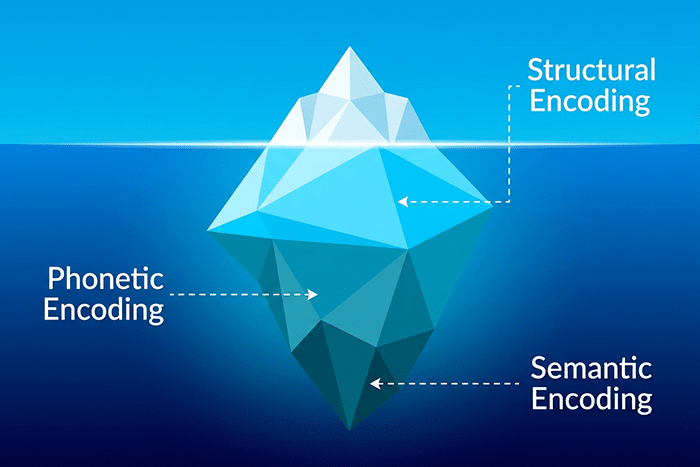
Have your students ever come into your classroom, insisting they studied and prepared for an upcoming test, yet they don’t perform nearly as well as you’d expect? While there are several reasons this could occur, one is that your students were not effectively retaining concepts to recall and apply them on an assessment. In this article, you will first learn about the three core processes of memory: encoding, storage, and retrieval, and discover briefly how those processes work together to help support learning and memory. Then, you will be introduced to one of many theories on memory, the Levels of Processing Theory, which describes how the level of processing concepts and ideas can dictate how strong your memory is.

  • Learning with Chain Reactions

Chain Reaction STEM Activities with Simple Machines

November 10, 2025|

In this article you’ll get an overview of classroom chain reactions from basic definitions to easy launch ideas. You’ll find suggestions for selecting materials, planning your space, and setting goals that feel achievable for your classroom size and schedule. We will show how these activities build confidence with innovation and give students regular practice with creativity, logic, and teamwork that carries into other subjects and their overall creativity.

  • Scientific Investigation Framework

The Scientific Investigation Framework: Re-Designing Labs in the Science Classroom

June 16, 2023|

Science is different in other content areas in that the foundation of its existence relies on asking questions about the world around us, forming and testing a hypothesis, and analyzing the results. It’s only natural that a science classroom would mirror the essence of this field. While direct instruction and practice-based learning have their place, the science classroom is where learning to discover is as important as the content itself. In this blog post, we’ll outline a specific process, the Scientific Investigation Framework, that will provide structure to discovery-based Lab work that will transform how students are introduced to new content and practice the necessary processes of a true scientist.

  • Supporting Oral Presentation

Supporting the Oral Presentation: A Checklist for Providing Feedback to Student Presentations in Your Classroom

May 19, 2022|

Students will be tasked with showcasing and presenting their work in various ways throughout their educational careers. This could be activities like reciting poetry or text, presenting at a science fair, participating in debate, or presenting a final project within their content-area class. Typically, you might design your presentation rubrics to focus on what matters most in your course- mastery of the course content. Because presentations can be used as one assessment method for students to showcase mastery, you might be looking for depth of content knowledge, accuracy, or expertise in the content students are discussing and how well the presentation itself communicates the students' message. These components are critical for an effective student presentation. But the actual characteristics of an oral presentation should also not be overlooked. For students to truly be effective communicators and demonstrate their best work, they will also need to be effective public speakers. Monitoring a student's public speaking ability and providing feedback and guidance for improvement can help develop them into effective communicators that will accel above and beyond your academic requirements for a presentation.

  • Positive Affirmations

Promote Positive Affirmations Between Students in your Classroom

May 5, 2022|

In a classroom context, positive affirmations are phrases and acknowledgments of positive aspects of a child’s personality, effort, behavior, or other characteristics. When affirmations are present in your classroom daily, it helps to set a positive tone within your classroom environment and enriches children’s perceptions of themselves. You may be most familiar with positive affirmations as a way for students to acknowledge aspects of themselves and use them as a mantra to help them continue to behave in a certain way. For example: “I am kind. I am smart. I am a hard worker. I am a helper. I am a leader.” Recited often, individuals may begin to have a healthier outlook on life, their character, and what they are capable of. The point of positive affirmations is to acknowledge yourself and others from a place of positivity and not criticism. This helps create motivated and happy children who value themselves, their work, and their peers.

  • CER-in-Science-min

Claim-Evidence-Reasoning (CER)

January 29, 2019|

Have you ever had students respond, “I don’t know. It just did,” when asked to analyze and interpret their classroom lab results? We all want our students to “think like a scientist,” but often they fall short in connecting the dots between the lab results and the science concepts. Claim-Evidence-Reasoning or CER is a writing strategy that can develop a student’s analytical thinking and argumentative writing skills to turn that “I don’t know” into “aha, so that’s why we got those results in the lab.”

Your Shopping Cart

Name Price
Buying for a team or group? Select quantities on checkout page.