Chat with us, powered by LiveChat

Home  »  Education Articles  » Instructional Improvement

  • Operant Conditioning in the Classroom

Skinner’s Theory of Operant Conditioning in the Classroom

August 12, 2026|

You have likely used, or seen, teachers transform and improve behaviors using a simple sticker chart as a rewards system. You might have also seen how a student’s behavior improves after you focus on providing consistent and specific praise. Positive and negative behaviors in your classroom don’t typically come out of nowhere, and much of what your students do is actually shaped by what happens before they do it and whether the behavior is followed by something like a reward, a consequence, or a specific action. One well-studied framework for understanding student behaviors comes from B.F. Skinner’s theory of operant conditioning, which describes how what comes after the behavior is what makes that behavior more or less likely to happen. In this article, you will learn about operant conditioning and why it can be beneficial to understand in your classroom.

  • Instructional Teaching Strategies

Instructional Strategies and Teaching Strategies in Your Classroom

July 31, 2026|

Instructional strategies are research-based methods that teachers use to deliver content to students and improve their instructional practice. But it also goes further than that, because by combining classroom management strategies, assessment strategies, and other brain-based and memory-based strategies to support students, they all work together to improve the classroom and increase learning. This article serves as a resource to understand how strong instructional and other teaching strategies translate to student success in your classroom. (Read more)

  • What is Rigor

What Is Rigor? Understanding Rigor Through Webb’s DOK

July 16, 2026|

As a teacher plans a reading unit for her upcoming class, she decides to increase the rigor of her planned lesson activities. Since the text she chose contains many unfamiliar words, students are tasked with reading a passage, listing the unfamiliar words, and defining them using their dictionaries. She decides that instead of requiring students to choose five words to define, she will require students to define ten words this time. (Read more)

  • Behavioral Momentum

Using Behavioral Momentum to Improve Student Behaviors

July 1, 2026|

Think about this familiar scene. In a kindergarten classroom, it is time to clean up an art activity and move to the carpet for reading time. You give the instructions for cleaning up, and most of your class starts putting materials away. One student does not; instead, she stays at her table, continuing to color and play with her materials. When you ask her to put her materials away and join the group, she says no and turns away. You repeat the direction more firmly, then walk over to her and ask her to join the group. Many teachers in this situation might continue to restate the expectations and become frustrated if one student is not able to listen. Even when classroom norms and rules are well implemented, some children will not comply for various reasons. Instead of struggling with compliance, teachers can add another approach for those students who need additional help. Called behavioral momentum, a teacher instead asks students to do smaller, easier-to-complete tasks that lead up to the main, more challenging tasks. (Read more)

  • Model Teaching - Geography Study

Building Geography Knowledge: Retrieval Practice of Countries, Regions, and Geographical Features

June 24, 2026|

Imagine a middle school teacher finishes a unit on East Asia. Students had been working on identifying and locating physical and geographic features on a map, like landforms, bodies of water, and urban centers, as well as identifying the location of countries around the world. In this unit, the teacher described the region’s monsoon climate, and students learned why its rivers support a denser population than in other areas. While students are engaged in the content throughout the unit and analyze a map of the region as they discuss its features, they have a hard time identifying geographic features on their own. For example, when the teacher projects a blank map onto the board and asks students to identify the Yellow Sea or label countries like China, Japan, and North and South Korea, many students are unable to do so, even though they discussed these areas in class extensively. (Read More)

  • Levels of Processing Theory

The Levels of Processing Theory

May 21, 2026|

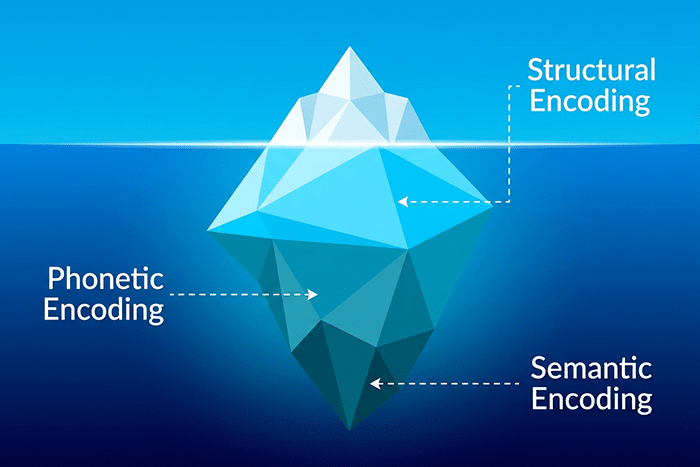
Have your students ever come into your classroom, insisting they studied and prepared for an upcoming test, yet they don’t perform nearly as well as you’d expect? While there are several reasons this could occur, one is that your students were not effectively retaining concepts to recall and apply them on an assessment. In this article, you will first learn about the three core processes of memory: encoding, storage, and retrieval, and discover briefly how those processes work together to help support learning and memory. Then, you will be introduced to one of many theories on memory, the Levels of Processing Theory, which describes how the level of processing concepts and ideas can dictate how strong your memory is.

  • Supporting Reading Struggles

Understanding Students with Reading Struggles

May 5, 2026|

All teachers, not only reading teachers, can benefit from understanding how students may struggle in reading, in order to better support them in the classroom. While the reading teacher is the primary educator focused on teaching students to read, all teachers across all content areas must be mindful of students’ reading difficulties. Reading is essential to comprehension, and all teachers have a responsibility to ensure that students learn to the fullest extent in the classroom. However, some students struggle significantly more with reading than others. This article will provide you with an overview of what to consider as you encounter students in your class who may exhibit reading struggles, either due to a specific disability or due to other reading difficulties.

  • AI Prompting Teaching

AI Prompts for Differentiated Lesson Plans

April 13, 2026|

Teachers are quickly realizing how much time AI tools can save them. This includes lesson planning, creating student-facing documents, and even helping with direct instruction. AI tools are nowhere close to a solution for all the challenges a teacher may face in the classroom, but they can help in several areas, particularly when it comes to planning and creating plans, lessons, or assessments for their students. Perhaps one of the best ways AI can be leveraged in the classroom is through creating customized and highly differentiated lessons and content for the various student groups all teachers find within their classroom.

  • Eriksons Theory in Teaching

Erikson’s Theory of Psychosocial Development: A Guide for Educators

January 21, 2026|

Understanding the development of your students helps you become a stronger educator, because you can identify specific strategies and ways to help your students that are developmentally appropriate. There are many developmental theories present to explain our growth has humans over time, but this article will focus on just one: Erik Erikson’s eight stages of development.

  • Title II Funding Cuts

What To Do About Title II Funding Cuts

July 24, 2025|

If you are reading this, you have likely been impacted by the Title II Part A (or Title II-A) funding freeze. First introduced back in 2001 under the No Child Left Behind Act and then revised in 2015 under the Every Student Succeeds Act, Title II-A funding has provided professional development support to teachers across the country. The focus of Title II-A funding has been to support teachers in improving or enhancing instruction with an end result of improved student performance.

Your Shopping Cart

Name Price
Buying for a team or group? Select quantities on checkout page.