Access to All PD Courses. The most cost-effective way to earn your required Professional Development hours. Once you purchase your hours bundle, you may choose any courses from our full PD course menu until you have used all hours. Access your courses for 1 full year.

Access to All Graduate-Level Courses. The most cost-effective way to earn Graduate-Level credits! Purchase your bundle, then choose any of our university-partnered courses. Access your courses for one year and work at your own pace. Pay the $70/credit fee as you go or when you finish.

Helping Gifted & Talented (GT) students persevere through challenging content can be supported through Growth Mindset strategies. This course provides you with the resources and strategies to foster a Growth Mindset in your GT students.

Helping Gifted & Talented (GT) students persevere through challenging content can be supported through Growth Mindset strategies. This course provides you with the resources and strategies to foster a Growth Mindset in your GT students.

This Quick Course will teach you what Bloom’s Taxonomy is, how it’s related to cognition, & how to use Bloom’s to more effectively design lessons around your standard or lesson objective.

This Quick Course will teach you what Webb’s DOK is and how it is related to rigor. You’ll learn about activities associated with each level of DOK, and how each level is related to a standard, lesson objective, and assessment or activities.

This course series contains curated courses from the Model Teaching platform that provide teachers the tools to address and eliminate learning loss in the classroom as well as risks of academic, social, and emotional decline.

This quick course will help you to understand common logical fallacies and consider how you might address fallacies within your lessons. You will learn about the structure of a sound logical argument, 12 fallacies that occur in flawed arguments, and examples for each fallacy.
This quick course will help you to understand common logical fallacies and consider how you might address fallacies within your lessons. You will learn about the structure of a sound logical argument, 12 fallacies that occur in flawed arguments, and examples for each fallacy.
This Quick Course shows how integrating visual arts boosts memory, reasoning, and creativity. With practical examples and the CREATE planning blueprint, you’ll leave with ready-to-use strategies to integrate art into your upcoming lessons.
This Quick Course shows how integrating visual arts boosts memory, reasoning, and creativity. With practical examples and the CREATE planning blueprint, you’ll leave with ready-to-use strategies to integrate art into your upcoming lessons.
This Quick Course will provide simple-to-implement ideas for enhancing creativity in your classroom, designed with your gifted students in mind. You’ll explore some challenges gifted students face and how you can support their creativity with simple activities that can be incorporated into your regular lessons.
This course will provide simple-to-implement ideas for enhancing creativity in your classroom, designed with your gifted students in mind. You’ll explore the challenges gifted students face and how you can support their creativity with simple activities that can be incorporated into your lessons.

Learn about divergent thinking and its role in creativity with activities that can help you foster divergent thinking in your students. You will also receive a resource packet of printables for student activities.
Learn about divergent thinking and its role in creativity with activities that can help you foster divergent thinking in your students. You will also receive a resource packet of printables for student activities.
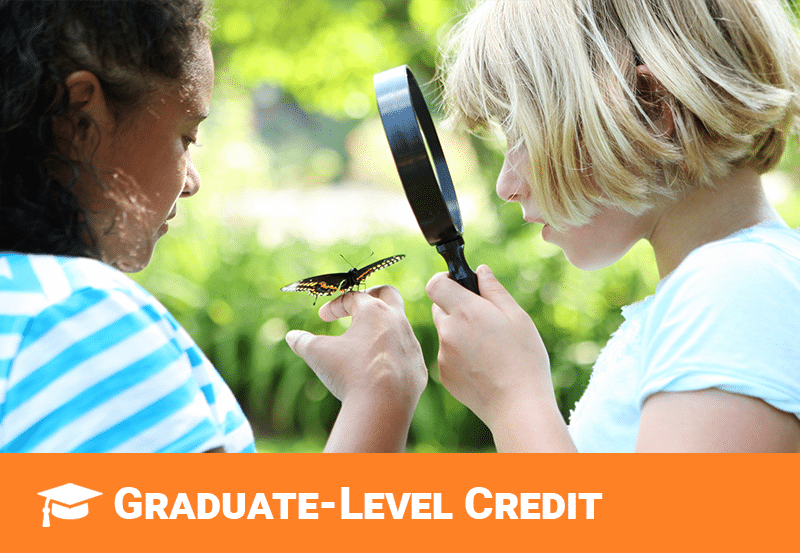
Explore the strategies involved in planning and executing inquiry-based lesson plans. The components of an inquiry-led lesson will be outlined and discussed, and participants will learn to develop and plan an inquiry-led lesson.

Explore the strategies involved in planning and executing inquiry-based lesson plans. The components of an inquiry-led lesson will be outlined and discussed, and participants will learn to develop and plan an inquiry-led lesson.

Learn how chain-reaction projects enrich instruction and strengthen students’ creativity and reasoning. Follow a clear, step-by-step design process for your class and utilize a ready-to-use checklist to implement it in your own classroom.
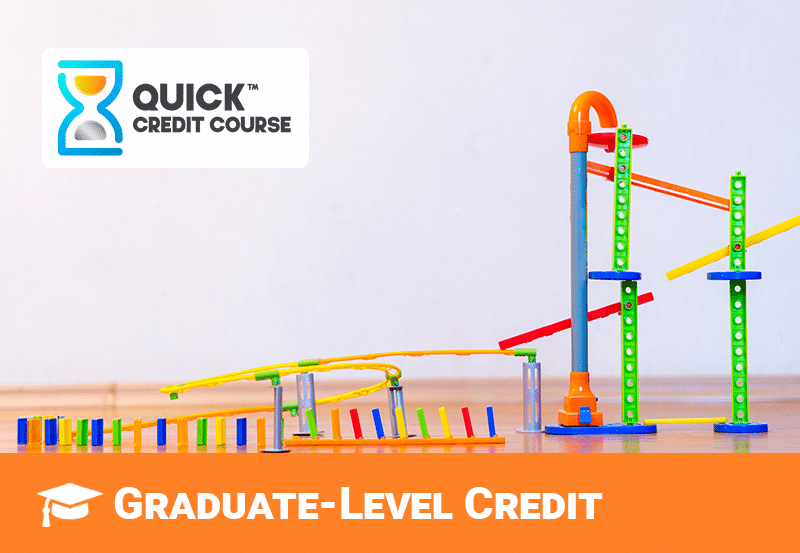
Learn how chain-reaction projects enrich instruction and strengthen students’ creativity and reasoning. Follow a clear, step-by-step design process for your class and utilize a ready-to-use checklist to implement it in your own classroom.

This quick course will teach you a method of memorizing details and facts using a technique called the Memory Palace. You will learn what it looks like in action, how to teach the technique to your students, and how to plan for its application in your own classroom.

This course will teach you a method of memorizing details and facts using a technique called the Memory Palace. Learn what it looks like in action and how to teach the technique to your students. This course also comes with a graphic organizer you can use as you introduce this strategy to your students.

Scientific Investigation in the classroom is a process where students are at the center of learning scientific principles through a discovery-based learning approach. This highly detailed course will teach you that a full scientific investigation consists of Pre- and Post-Lab activities in addition to the in-class laboratory lesson.
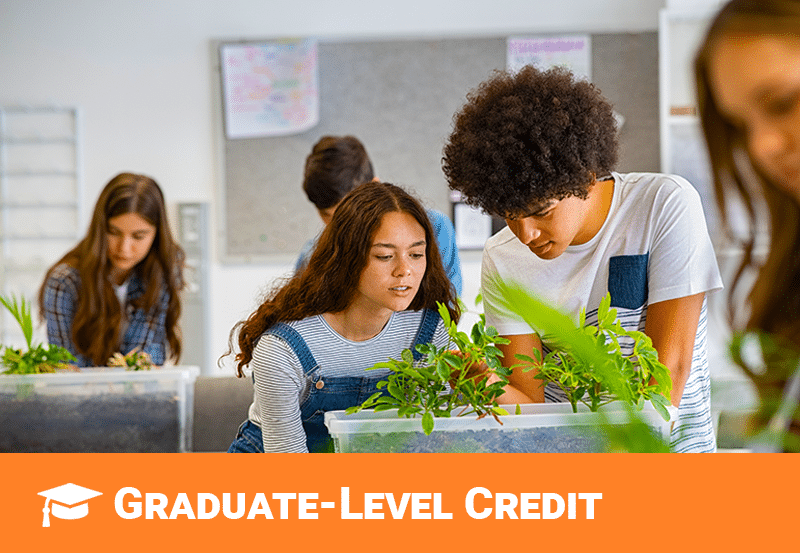
This highly detailed course will teach you that a full scientific investigation consists of Pre- and Post-Lab activities in addition to the in-class laboratory lesson. Proper investigation is more than completing a hands-on activity that aligns with content; it is a process that sets students up for independent discovery or a problem to solve.

This course gives participants a thorough understanding of Project Based Learning, including the critical components, as well as common misconceptions. Throughout the course, participants will design their own cycle of PBL they can immediately implement in their own classroom.

In this course, you will learn each component of the Project-Based Learning (PBL) Lesson Cycle and how to implement it effectively across your curriculum.

Learn why recitation in the classroom can be an important component of your student’s educational journey. This Quick Course teaches the process of rote memorization of important and influential texts, and considerations for recitation through oral presentation.

Learn why recitation in the classroom can be an important component of your student’s educational journey. This Quick Course teaches the process of rote memorization of important and influential texts, and considerations for recitation through oral presentation.
This quick course will provide a closer look at common characteristics gifted students often possess and how those traits can impact their social and emotional development. We will then explore several strategies you can use in your classroom and lessons to help improve the social-emotional intelligence and development of your GT students.

We will look at common characteristics gifted students often possess and how those traits can impact their social/emotional development. We will then explore strategies to use in your classroom and lessons to help improve the SEL development of your GT students.

Learn a structure for introducing poster presentations into your GT science classroom. You will learn the requirements for students to construct their own experiments, analyze data, and then report their results in a gallery walk format. A pre-designed poster template is included.

This course will teach you a purpose and structure for introducing poster presentations into your gifted and talented science classroom and the requirements for students to construct experiments, analyze data, and report results. You will also receive a poster template for use in your classroom.
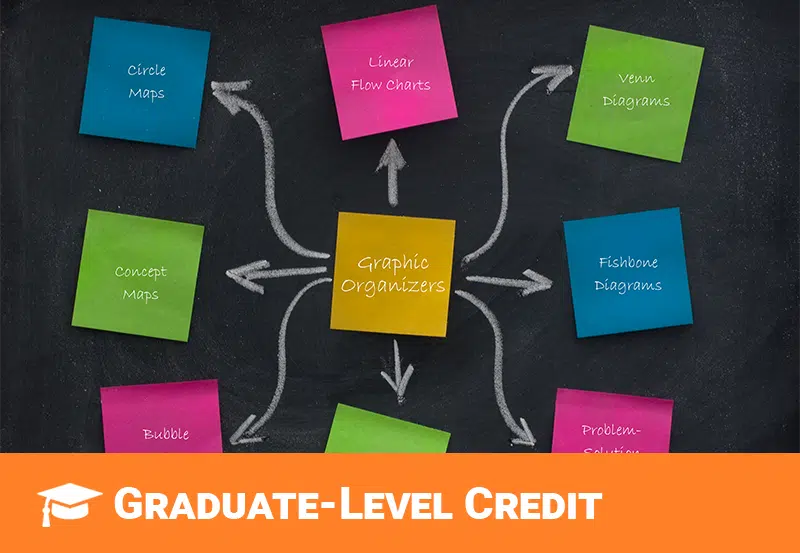
This course analyzes the six levels of the Revised Bloom’s Taxonomy and how graphic organizers can be applied to each cognitive process dimension, allowing for targeted scaffolding of student thinking.

This course analyzes the six levels of the Revised Bloom’s Taxonomy and how graphic organizers can be applied to each cognitive process dimension, allowing for targeted scaffolding of student thinking.

Learn why retrieval is important in the math classroom. Also, learn how to incorporate simple retrieval practice strategies into your math lessons to help improve student memory and deepen their understanding of math concepts.

Learn why retrieval is important in the math classroom. Also, learn how to incorporate simple retrieval practice strategies into your math lessons to help improve student memory and deepen their understanding of math concepts.

Learn about the three main types of assessment and how they can be differentiated for gifted students: pre-assessment, formative assessment, and summative assessment. The course will discuss the importance of differentiating rigor, particularly when assessing gifted students.

Learn about the three main types of assessment and how they can be differentiated for gifted students: pre-assessment, formative assessment, and summative assessment. The course will discuss the importance of differentiating rigor and how to develop a plan of action to use within your own current or future classroom with GT students.