


Access to All PD Courses. The most cost-effective way to earn your required Professional Development hours. Once you purchase your hours bundle, you may choose any courses from our full PD course menu until you have used all hours. Access your courses for 1 full year.

Access to All Graduate-Level Courses. The most cost-effective way to earn Graduate-Level credits! Purchase your bundle, then choose any of our university-partnered courses. Access your courses for one year and work at your own pace. Pay the $70/credit fee as you go or when you finish.

Learn what Universal Design for Learning (UDL) is, and the components that make up each UDL principle. You’ll learn about strategies that follow the UDL model so that you can create lessons that support all students.

Learn what Universal Design for Learning (UDL) is, and the components that make up each UDL principle. You’ll learn about strategies that follow the UDL model so that you can create lessons that support all students.

Learn about the six co-teaching models, as well as how to implement co-teaching in their classroom from the initial planning stages, all the way through setting curriculum goals, and making modifications.

In this course, we will define diverse student populations and discuss two components- the educationally disadvantaged student and the at-risk student. You will learn strategies that support each level of Maslow’s Hierarchy of Needs and receive a planning tool to help you support each student.
This course will define diverse student populations and discuss two components of diverse student populations- the educationally disadvantaged student and the at-risk student. You will learn strategies that help support each level of Maslow’s Hierarchy of Needs and receive a planning tool to help you support your students.

Support the writing progress of ELL students and learn several specific support strategies you can implement to address all stages of the writing process (before, during, and after writing), as well as how to monitor progress.

This course series will help you support and improve elementary reading in your students, especially those that are struggling, through grouping and instructional strategies.

Learn the importance of writing practice for English Language Learners (ELLs) and six specific strategies and methods you can incorporate into your lessons, regardless of content area, to improve the literacy and writing skills of your ELLs.

In this course you will learn how to utilize the explicit instruction model to select the correct reading behavior or skill for your student or groups, to build a plan aligned to student goals, and to implement the lesson into your classroom.

In this course you will learn how to utilize the explicit instruction model to select the correct reading behavior or skill for your student or groups, to build a plan aligned to student goals, and to implement the lesson into your classroom.

This quick course will provide you with a clear understanding of differentiated instruction and how it can support a mixed-ability classroom. You will learn about the core components of differentiation and review the learning environment as an additional important component.
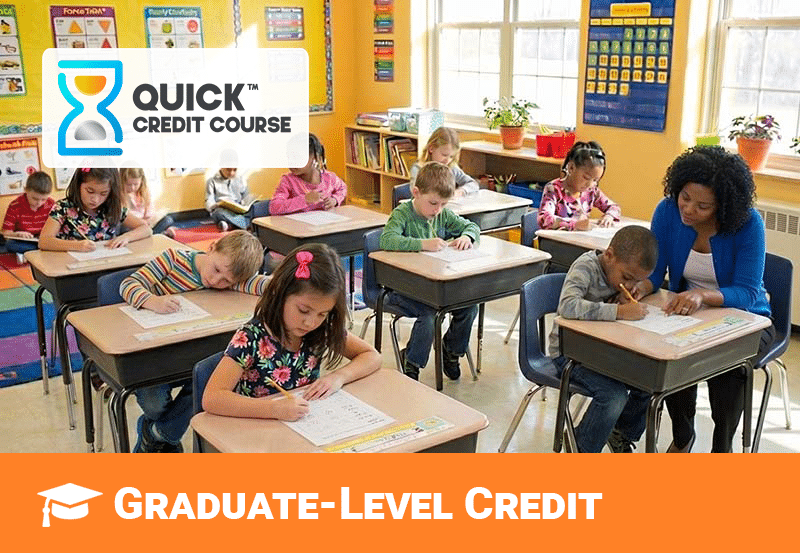
This quick course will provide you with a clear understanding of differentiated instruction and how it can support a mixed-ability classroom. You will learn about the core components of differentiation and review the learning environment as an additional important component.

Learn about the MTSS framework, its origins, and its role in classroom and school-wide interventions. Learn about the MTSS tiers and how they address academic, behavioral, and social-emotional needs, along with examples of preventive interventions at each tier.
Learn about the MTSS framework, its origins, and its role in classroom and school-wide interventions. Learn about the MTSS tiers and how they address academic, behavioral, and social-emotional needs, along with examples of preventive interventions at each tier.

This course will explain the benefits of implementing peer tutoring strategies with ELLs and give participants several easy-to-implement strategies for pairing fluent English speakers with ELLs that they can implement at any grade level and in any content area.

This course will explain the benefits of implementing peer tutoring strategies with ELLs and give participants several easy-to-implement strategies for pairing fluent English speakers with ELLs that they can implement at any grade level and in any content area.

This course will provide you with an outline for what strong reading instruction and intervention look like in the classroom. You will learn about the science of reading, explicit, systematic, and sequential instruction, and multisensory strategies for your reading students.
This course will provide you with an outline for what strong reading instruction and intervention look like in the classroom. You will learn about the science of reading, explicit, systematic, and sequential instruction, and multisensory strategies for your reading students.

Learn why recitation in the classroom can be an important component of your student’s educational journey. This Quick Course teaches the process of rote memorization of important and influential texts, and considerations for recitation through oral presentation.
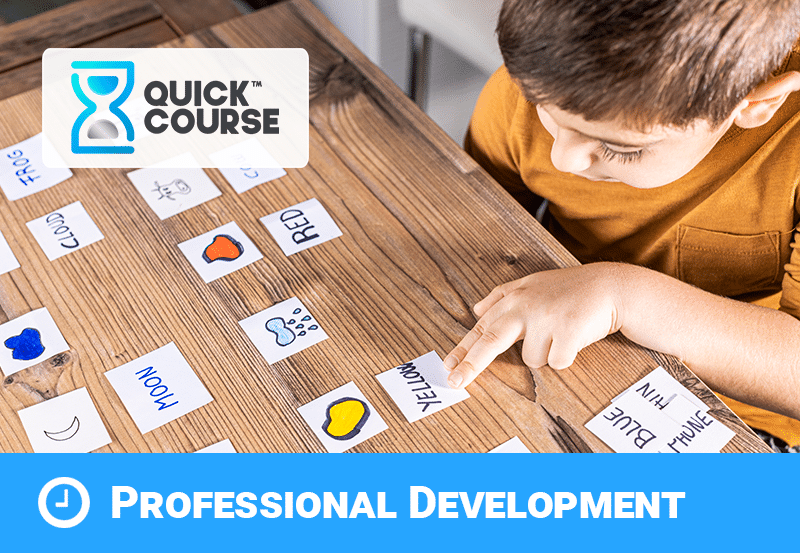
This Quick Course will provide you with simple ideas for supporting your ELL students in learning Tier 2 and Tier 3 vocabulary. Learn the different tiers of academic vocabulary and simple ways to easily support your ELL students during your lesson.

This Quick Course will provide you with simple ideas for supporting your ELL students in learning Tier 2 and Tier 3 vocabulary. Learn the different tiers of academic vocabulary and simple ways to easily support your ELL students during your lesson.

English language learners have unique needs, since they must learn content while simultaneously improving their understanding of the English language. This bundle of courses provides you with ideas to support students in their language acquisition and writing performance.

Support the writing progress of ELL students and learn several specific support strategies you can implement to address all stages of the writing process (before, during, and after writing), as well as how to monitor progress.
Incorporate study skills into students’ everyday lessons centered around questions directly aligned to the daily objectives. The notecard system is a practical procedure students can use to maintain an organized and sustainable process for studying.
Incorporate study skills into students’ everyday lessons centered around questions directly aligned to the daily objectives. The notecard system is a practical procedure students can use to maintain an organized and sustainable process for studying.

This Quick Course will teach you about English Language Learners (ELLs) and their proficiency levels, the methods for grouping ELLs, and considerations for flexible grouping.
This Quick Course will teach you about English Language Learners (ELLs) and their proficiency levels, the methods for grouping ELLs, and considerations for flexible grouping.

Learn the importance of writing practice for English Language Learners (ELLs) and six specific strategies and methods you can incorporate into your lessons, regardless of content area, to improve the literacy and writing skills of your ELLs.
