Education Articles for Teachers & Educators
Explore research-based articles on K–12 education, written by Model Teaching and guest contributors.
Our Latest Article
Consider this scenario. A third-grade teacher is about to begin a math lesson on finding the missing side length of a polygon when the perimeter and the other side lengths are given. She has taught perimeter over the last two days, and her lesson plan is ready. What she does not yet know is whether her students can still determine the perimeter of any object when given the length of all sides, whether they can add and subtract well enough to work with those numbers, or which two or three students will need her attention first once the new content begins. Without that information, she will find out the answers later, like in the middle of the lesson, or on the unit test, when it’s too late to help her students in the moment. Effective checks for understanding come from strategic planning, beginning with what you want to test students on and ending with data gathered from every student about what they have learned and know from the lesson. The Model Teaching Math CFU Lesson Builder is a free planning tool that helps create a detailed plan to check for understanding in a specific lesson, aligned to your lesson objective or standard.

Recent Articles

Imagine a middle school teacher finishes a unit on East Asia. Students had been working on identifying and locating physical and geographic features on a map, like landforms, bodies of water, and urban centers, as well as identifying the location of countries around the world. In this unit, the teacher described the region’s monsoon climate, and students learned why its rivers support a denser population than in other areas. While students are engaged in the content throughout the unit and analyze a map of the region as they discuss its features, they have a hard time identifying geographic features on their own. For example, when the teacher projects a blank map onto the board and asks students to identify the Yellow Sea or label countries like China, Japan, and North and South Korea, many students are unable to do so, even though they discussed these areas in class extensively. (Read More)
-
We all know the Think-Pair-Share! It’s a common student collaboration strategy that is seemingly ubiquitous across classrooms. But it has been around long enough that many teachers will treat it as routine to incorporate into the classroom, rather than thinking more deeply about it as a true learning strategy. (read more)
-
In this Model Teaching Spotlight webinar, you will explore Think-Pair-Share as a research-backed collaborative learning model and learn how to implement it effectively in any classroom. You will consider some elements that determine whether a collaboration activity produces strong learning, evaluate the kind of prompts you might build to promote higher-order thinking and peer discourse, and consider how you might use the think-pair-share collaborative structure to engage your students.
-
You can earn thousands of dollars in increased salary through a lane change in Pennsylvania by earning graduate-level credits! This article will provide you with some examples of lane changes and how they work across different district types to advance your salary.
-
In this article we review the importance of math fluency and automaticity, the ability to recall basic math facts on demand and solve problems with accuracy in a reasonable amount of time. We trace the three phases students pass through on the way to mastery, moving from counting to reasoning to instant recall. Strong math practice has three parts: explicit instruction that builds conceptual understanding, retrieval practice paired with spaced repetition, and immediate feedback to correct mistakes. We then introduce the Model Teaching Math Facts App, a digital tool that lets teachers and parents tailor practice across addition, subtraction, multiplication, and division through practice mode, flashcards, and printable worksheets. We close by comparing it to gamified and account-based apps and offering tips for fitting short, daily practice into your classroom.
-
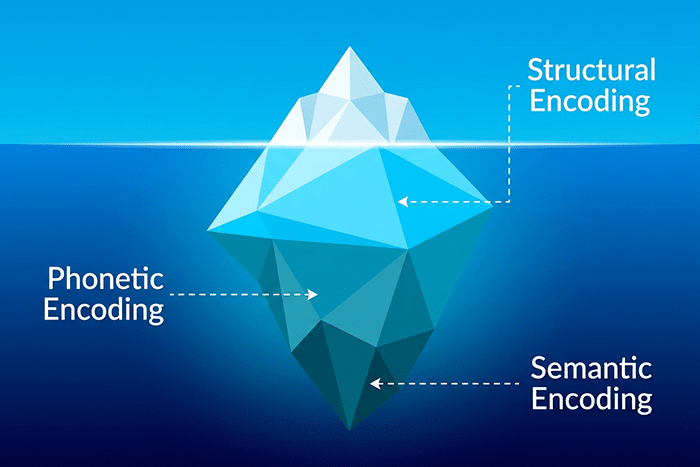
Have your students ever come into your classroom, insisting they studied and prepared for an upcoming test, yet they don’t perform nearly as well as you’d expect? While there are several reasons this could occur, one is that your students were not effectively retaining concepts to recall and apply them on an assessment. In this article, you will first learn about the three core processes of memory: encoding, storage, and retrieval, and discover briefly how those processes work together to help support learning and memory. Then, you will be introduced to one of many theories on memory, the Levels of Processing Theory, which describes how the level of processing concepts and ideas can dictate how strong your memory is.
-
You can earn graduate-level credits for your California teaching lane change to add thousands of dollars to your salary each year. This article will provide you with some examples of lane changes and how they work across different types of districts, and will help you evaluate the lowest cost path to earn credits and increase your salary.
-
Students are using AI chatbots to skip the hard work of learning, and teachers are watching critical thinking skills suffer as a result. But AI isn't going away, and the benefits it offers for productivity and research are hard to ignore. So how do educators take advantage of what AI does well without letting it shortcut student learning? In this article, we make the case for flipped learning as a potential solution. Flipped learning gives teachers a practical way to embrace AI while keeping students doing the thinking themselves. Read the whole article to learn more.
-
This article will provide you with examples of how your lane change works in districts across Ohio, as well as the lowest cost path for you to accumulate credits to increase your salary. Earn graduate-level credits for your Ohio lane change to add thousands of dollars to your salary each year.
-
All teachers, not only reading teachers, can benefit from understanding how students may struggle in reading, in order to better support them in the classroom. While the reading teacher is the primary educator focused on teaching students to read, all teachers across all content areas must be mindful of students’ reading difficulties. Reading is essential to comprehension, and all teachers have a responsibility to ensure that students learn to the fullest extent in the classroom. However, some students struggle significantly more with reading than others. This article will provide you with an overview of what to consider as you encounter students in your class who may exhibit reading struggles, either due to a specific disability or due to other reading difficulties.
-
If you teach in Illinois, you may have noticed that your district’s salary schedule may be different from that of a neighboring district, and options for salary increases depend on the individual school district you work in. In many districts across Illinois, earning graduate-level credits can help you increase your salary. For every 15 or 30 credits you accumulate beyond your bachelor’s degree or your master’s degree, your district could allow you to trigger a lane change on your salary schedule and add thousands of dollars to your paycheck every year. Read more in this article.
-
Learn about the benefits of brain breaks and explore simple brain break strategies you can implement through your lessons. You will have the opportunity to plan to implement brain breaks, leave the course with ideas and strategies to immediately add these ideas to your next lesson.