


Access to All PD Courses. The most cost-effective way to earn your required Professional Development hours. Once you purchase your hours bundle, you may choose any courses from our full PD course menu until you have used all hours. Access your courses for 1 full year.

Access to All Graduate-Level Courses. The most cost-effective way to earn Graduate-Level credits! Purchase your bundle, then choose any of our university-partnered courses. Access your courses for one year and work at your own pace. Pay the $70/credit fee as you go or when you finish.

Learn what Universal Design for Learning (UDL) is, and the components that make up each UDL principle. You’ll learn about strategies that follow the UDL model so that you can create lessons that support all students.

Learn what Universal Design for Learning (UDL) is, and the components that make up each UDL principle. You’ll learn about strategies that follow the UDL model so that you can create lessons that support all students.

Learn about the six co-teaching models, as well as how to implement co-teaching in their classroom from the initial planning stages, all the way through setting curriculum goals, and making modifications.

This course will teach you about the six co-teaching instructional models and how to implement co-teaching in the classroom successfully.

This course, best for educators new to the RTI model, provides an overview for how instruction in the classroom can best support a response to intervention model.

This course series contains curated courses from the Model Teaching platform that provide teachers the tools to address and eliminate learning loss in the classroom as well as risks of academic, social, and emotional decline.
This course will define developmental theories and how they drive teaching and learning practices. You will learn about various psychosocial, behavioral, and cognitive developmental theories, and why this knowledge is critical for educators.

This course will define developmental theories and how they drive teaching and learning practices. You will learn about various psychosocial, behavioral, and cognitive developmental theories, and why this knowledge is critical for educators.

In this Quick Course, you will learn about the benefits of brain breaks and explore simple brain break strategies you can implement through your lessons. You will also learn about the BOOST method for implementing brain breaks effectively in your classroom.

Learn about the benefits of brain breaks and explore simple brain break strategies you can implement through your lessons. Learn to plan and implement brain breaks using the BOOST template and leave the course with ideas for implementing brain breaks in your classroom.

This quick course provides you with a guide to understanding effective IEP goals within a student’s Individualized Education Plan (IEP). You will learn about the main components of an IEP and why it is important to design strong goals for your students receiving special education services.
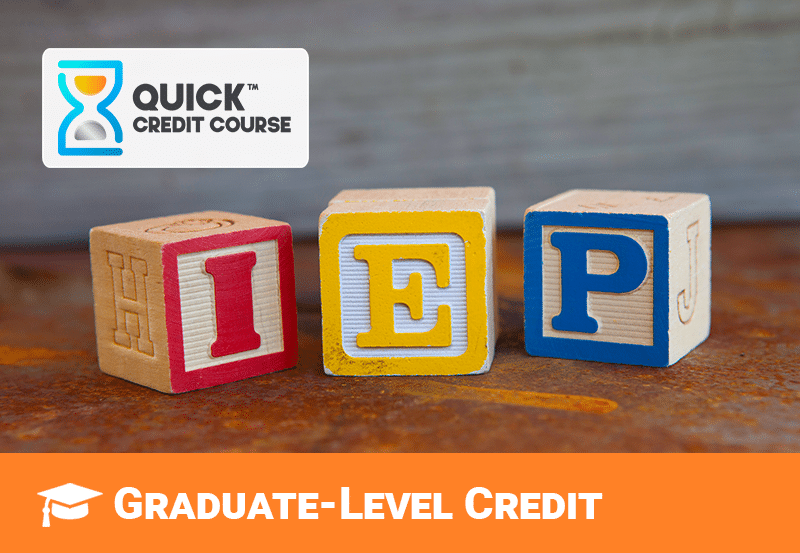
This quick course provides you with a guide to understanding effective IEP goals within a student’s Individualized Education Plan (IEP). You will learn about the main components of an IEP and why it is important to design strong goals for your students receiving special education services.

In this course, you will learn an approach to planning for targeted differentiation to support your special needs students in the classroom.

In this course, you will explore how to process, file, and analyze data for documentation as well as build a documentation action plan to help you document student academic and behavioral trends.

In this course, we will define diverse student populations and discuss two components- the educationally disadvantaged student and the at-risk student. You will learn strategies that support each level of Maslow’s Hierarchy of Needs and receive a planning tool to help you support each student.

This course will define diverse student populations and discuss two components of diverse student populations- the educationally disadvantaged student and the at-risk student. You will learn strategies that help support each level of Maslow’s Hierarchy of Needs and receive a planning tool to help you support your students.

This Quick Course will teach you about the need for students with Autism to work within a predictable and structured environment. In order to lessen anxiety, improve behaviors, and create calm and peace within your classroom.

This Quick Course will teach you about the need for students with Autism to work within a predictable and structured environment. In order to lessen anxiety, improve behaviors, and create calm and peace within your classroom.

This quick course will provide you with a clear understanding of differentiated instruction and how it can support a mixed-ability classroom. You will learn about the core components of differentiation and review the learning environment as an additional important component.
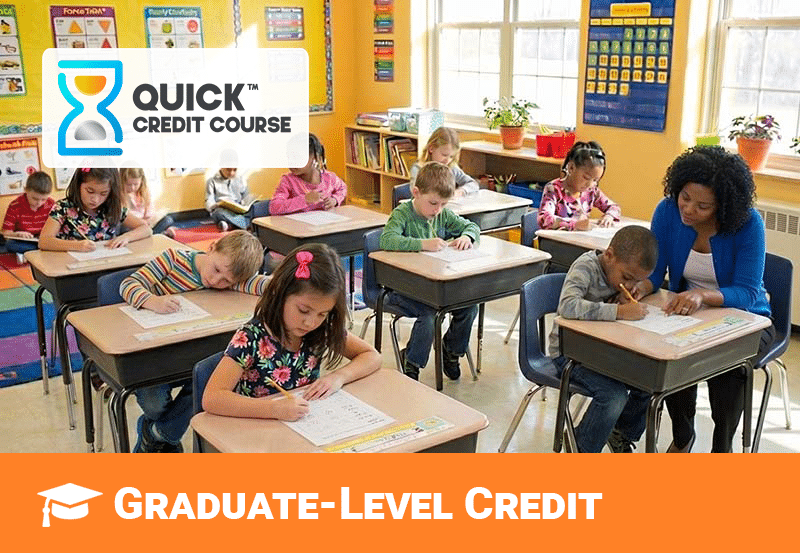
This quick course will provide you with a clear understanding of differentiated instruction and how it can support a mixed-ability classroom. You will learn about the core components of differentiation and review the learning environment as an additional important component.

In this introductory-level course, you will learn methods for documenting a student’s academic and social behaviors in the classroom and why this documentation is important to student success.

In this course series, you will learn how to actively monitor students throughout the instructional process, collect academic and behavioral data as well as how to process, file, and analyze data for documentation and better decision making.
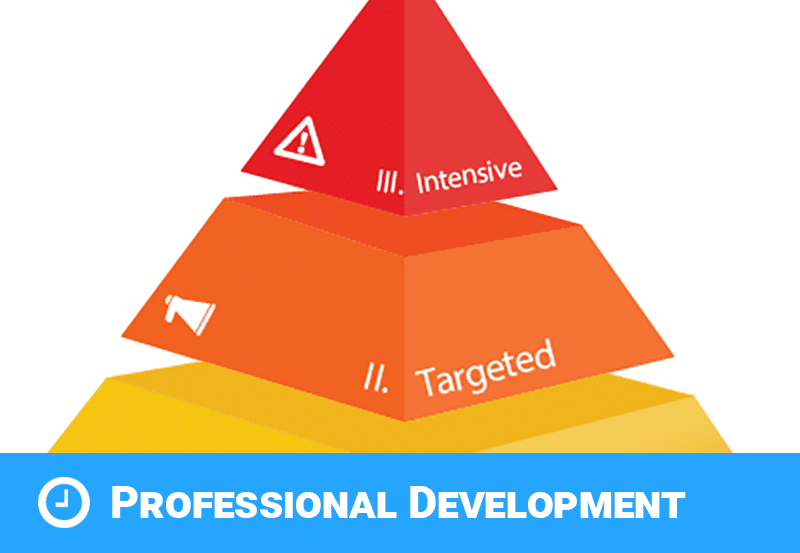
This course, best for educators new to the RTI model, provides an overview for how instruction in the classroom can best support a response to intervention model.

This 4-course bundle contains four courses that will help you build a strong classroom management plan and then put supports in place to manage and improve student behaviors and will teach you how to design efficient classroom processes for a more orderly classroom.

Learn about the MTSS framework, its origins, and its role in classroom and school-wide interventions. Learn about the MTSS tiers and how they address academic, behavioral, and social-emotional needs, along with examples of preventive interventions at each tier.
Learn about the MTSS framework, its origins, and its role in classroom and school-wide interventions. Learn about the MTSS tiers and how they address academic, behavioral, and social-emotional needs, along with examples of preventive interventions at each tier.

This course will explain the benefits of implementing peer tutoring strategies with ELLs and give participants several easy-to-implement strategies for pairing fluent English speakers with ELLs that they can implement at any grade level and in any content area.
Analyze expectations in order to select the appropriate methods of differentiation for different student types, including students with special needs.

This course will provide you with an outline for what strong reading instruction and intervention look like in the classroom. You will learn about the science of reading, explicit, systematic, and sequential instruction, and multisensory strategies for your reading students.

This course will provide you with an outline for what strong reading instruction and intervention look like in the classroom. You will learn about the science of reading, explicit, systematic, and sequential instruction, and multisensory strategies for your reading students.
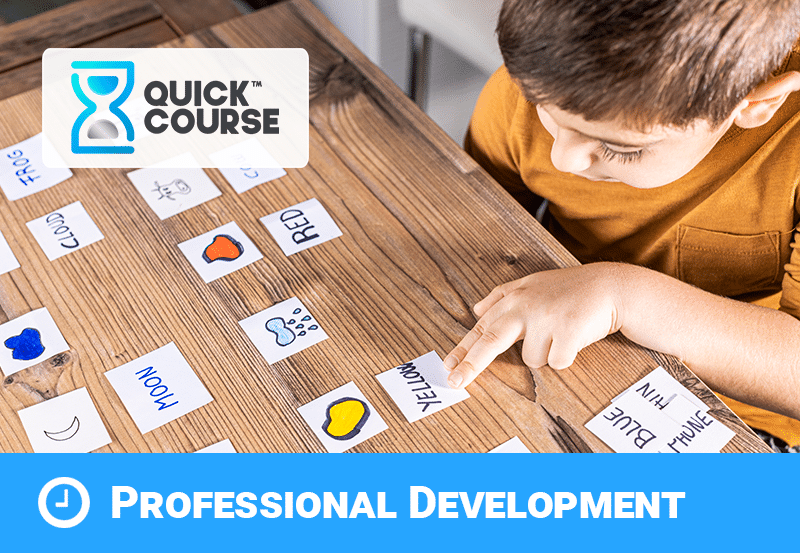
This Quick Course will provide you with simple ideas for supporting your ELL students in learning Tier 2 and Tier 3 vocabulary. Learn the different tiers of academic vocabulary and simple ways to easily support your ELL students during your lesson.

Learn the benefits of STEM activities in the special education or general classroom to support students with special needs. Learn how to align STEM activities with a student’s IEP goals and consider essential components of an effective STEM activity that will support and enrich your students.
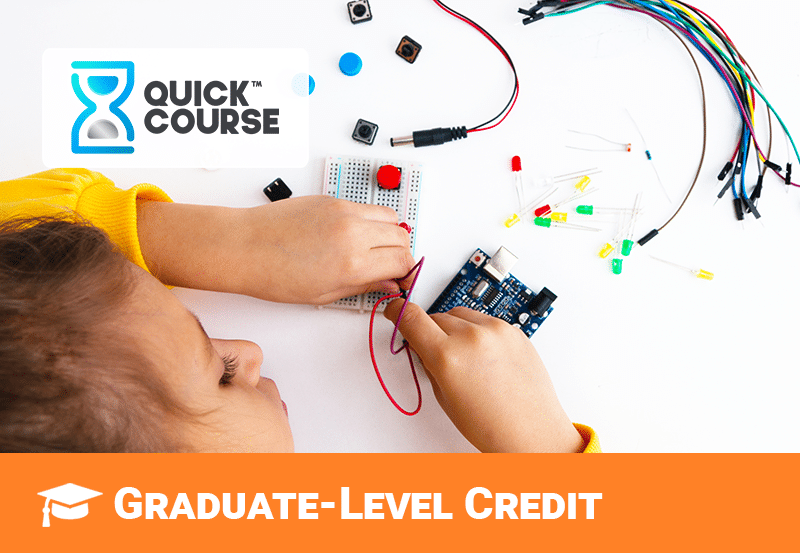
Learn the benefits of STEM activities in the special education or general classroom to support students with special needs. Learn how to align STEM activities with a student’s IEP goals and consider essential components of an effective STEM activity that will support and enrich your students.

This course will provide you with a detailed overview of social-emotional learning (SEL) and the value of incorporating SEL into the classroom to help improve academic success and emotional intelligence.
This course will provide you with a detailed overview of social-emotional learning (SEL) and the value of incorporating SEL into the classroom to help improve academic success and emotional intelligence.

Though not a comprehensive list of special populations, this collection of Quick Courses provides you with a variety of ideas for how to support different types of students in your classroom.
Learn about types & signs of trauma in adolescents and how to implement strategies to support a trauma-informed classroom. Design your classroom culture so that you are maintaining a safe space that supports all students.

Learn about types & signs of trauma in adolescents and how to implement strategies to support a trauma-informed classroom. Design your classroom culture so that you are maintaining a safe space that supports all students.

Learn the types & signs of trauma in children and how you can design a trauma-informed classroom. Learn to design your classroom and its culture so that you are maintaining a safe space that supports all children.
Learn the types & signs of trauma in children and how you can design a trauma-informed classroom. Learn to design your classroom and its culture so that you are maintaining a safe space that supports all children.

This quick course will help you better understand your students that have been diagnosed with ADHD. You will learn the types of ADHD, common symptoms of ADHD, and general strategies to incorporate into your classroom so that all students can be successful.
This Quick Course will help you better understand your students that have been diagnosed with ADHD. You will learn the types of ADHD, common symptoms of ADHD, and general strategies to incorporate into your classroom so that all students can be successful.

This quick course will help you better understand your students who have been diagnosed with dyslexia. Learn about common weaknesses in certain skills for children with dyslexia and general strategies to incorporate into your classroom.
This quick course will help you better understand your students who have been diagnosed with dyslexia. Learn about common weaknesses in certain skills for children with dyslexia and general strategies to incorporate into your classroom.

Learn how to use data to diagnose functions of behavior & implement an effective intervention plan that will address inappropriate behaviors, improving the learning environment of your classroom.
This course will teach you some early warning indicators of student drop-outs, some potential root causes of those factors, and recommended strategies to help support all the students in your class and recognize early warning indicators that a student may be at risk.

Learn some early warning indicators of student drop-outs, some potential root causes of those factors, and recommended strategies to help support all the students in your class. Recognizing early indicators and knowing support strategies is critical for preventing drop-outs.
In this AI fundamentals Quick Course, we will review how to use complex and highly specific prompts (mega-prompts) to build detailed, differentiated lesson plans for your students using common AI models.
