Home »
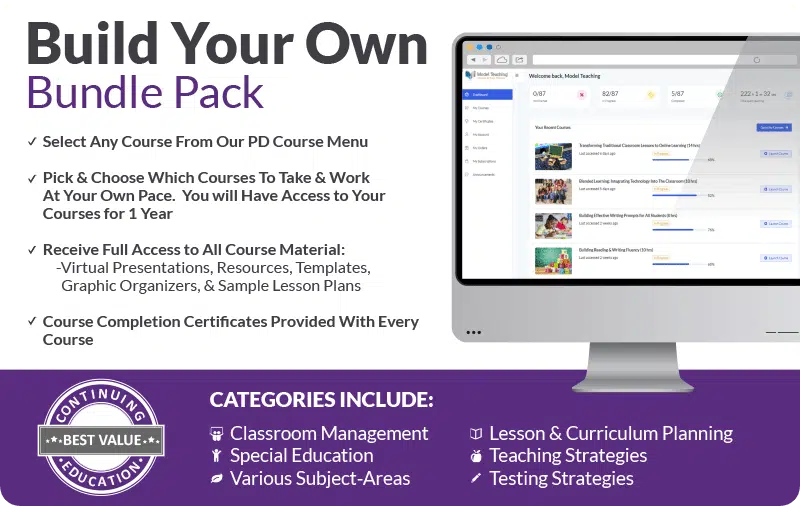
Access to All PD Courses. The most cost-effective way to earn your required Professional Development hours. Once you purchase your hours bundle, you may choose any courses from our full PD course menu until you have used all hours. Access your courses for 1 full year.

Access to All Graduate-Level Courses. The most cost-effective way to earn Graduate-Level credits! Purchase your bundle, then choose any of our university-partnered courses. Access your courses for one year and work at your own pace. Pay the $70/credit fee as you go or when you finish.

Helping Gifted & Talented (GT) students persevere through challenging content can be supported through Growth Mindset strategies. This course provides you with the resources and strategies to foster a Growth Mindset in your GT students.

Helping Gifted & Talented (GT) students persevere through challenging content can be supported through Growth Mindset strategies. This course provides you with the resources and strategies to foster a Growth Mindset in your GT students.

This Quick Course will teach you what Bloom’s Taxonomy is, how it’s related to cognition, & how to use Bloom’s to more effectively design lessons around your standard or lesson objective.
This Quick Course will teach you what Bloom’s Taxonomy is, how it’s related to cognition, & how to use Bloom’s to more effectively design lessons around your standard or lesson objective.

This Quick Course will teach you what Webb’s DOK is and how it is related to rigor. You’ll learn about activities associated with each level of DOK, and how each level is related to a standard, lesson objective, and assessment or activities.
This Quick Course will teach you what Webb’s DOK is and how it is related to rigor. You’ll learn about activities associated with each level of DOK, and how each level is related to a standard, lesson objective, and assessment or activities.

Learn what Universal Design for Learning (UDL) is, and the components that make up each UDL principle. You’ll learn about strategies that follow the UDL model so that you can create lessons that support all students.

Learn about the six co-teaching models, as well as how to implement co-teaching in their classroom from the initial planning stages, all the way through setting curriculum goals, and making modifications.
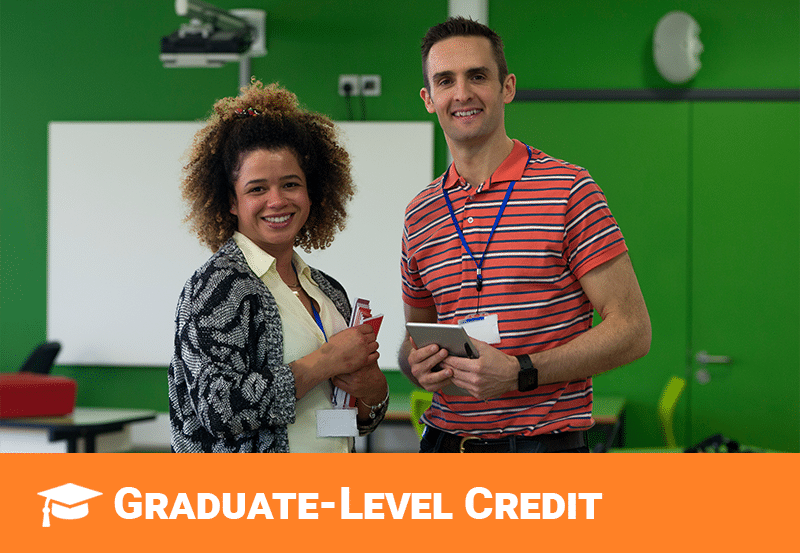
This course will teach you about the six co-teaching instructional models and how to implement co-teaching in the classroom successfully.
In this course, you will learn about the components of effective academic discussion and will be provided with everything you need to build a complete plan to implement academic discussions in your classroom while ensuring students master content knowledge aligned with your lesson objectives.
In this course, you will learn about the components of effective academic discussion and will be provided with everything you need to build a complete plan to implement academic discussions in your classroom while ensuring students master content knowledge aligned with your lesson objectives.

This course, best for educators new to the RTI model, provides an overview for how instruction in the classroom can best support a response to intervention model.

Learn how to actively monitor students throughout the instructional process and to analyze data collected in order to better support your students.

This course series contains curated courses from the Model Teaching platform that provide teachers the tools to address and eliminate learning loss in the classroom as well as risks of academic, social, and emotional decline.

This course will provide a detailed overview of the benefits and limitations of student AI use in the classroom. It will review what AI is and how it is rapidly evolving, discuss ethical considerations, and describe a variety of student-focused AI tools commonly used today for various subjects.
This course will provide a detailed overview of the benefits and limitations of student AI use in the classroom. It will review what AI is and how it is rapidly evolving, discuss ethical considerations, and describe a variety of student-focused AI tools commonly used today for various subjects.

This course is essential training for both new and experienced teachers who are interested in learning the basics of AI and how to incorporate AI tools in their lessons to help improve their instructional efficiency and quality.
This course is essential training for both new and experienced teachers who are interested in learning the basics of AI and how to incorporate AI tools in their lessons to help improve their instructional efficiency and quality.

This course bundle contains two AI-focused courses to help you improve your classroom, instruction, and student learning. AI is here to stay, so learn some simple strategies to embrace how AI can be used to help improve academic outcomes in your students!

This Quick Course will teach you how to design homework that is aligned to classroom instruction and effective in supporting student academic achievement.

This Quick Course will teach you how to design homework that is aligned to classroom instruction and effective in supporting student academic achievement.

This quick course will help you to understand common logical fallacies and consider how you might address fallacies within your lessons. You will learn about the structure of a sound logical argument, 12 fallacies that occur in flawed arguments, and examples for each fallacy.
This quick course will help you to understand common logical fallacies and consider how you might address fallacies within your lessons. You will learn about the structure of a sound logical argument, 12 fallacies that occur in flawed arguments, and examples for each fallacy.
This course goes beneath surface-level classroom management systems to explore the behavioral science and psychology behind student behavior. You will learn 12 research-backed theories organized around three drivers of behavior, along with implementation strategies to improve student behavior.
This course will define developmental theories and how they drive teaching and learning practices. You will learn about various psychosocial, behavioral, and cognitive developmental theories, and why this knowledge is critical for educators.
This course will define developmental theories and how they drive teaching and learning practices. You will learn about various psychosocial, behavioral, and cognitive developmental theories, and why this knowledge is critical for educators.
This course will define memory theories and the three memory processes: encoding, storage, and retrieval. Participants will be able to explicitly teach strategies and incorporate them into their daily practices to develop students’ encoding and storage skills and their ability to recall information from memory.
This Quick Course shows how integrating visual arts boosts memory, reasoning, and creativity. With practical examples and the CREATE planning blueprint, you’ll leave with ready-to-use strategies to integrate art into your upcoming lessons.
This Quick Course shows how integrating visual arts boosts memory, reasoning, and creativity. With practical examples and the CREATE planning blueprint, you’ll leave with ready-to-use strategies to integrate art into your upcoming lessons.

This course series will provide a comprehensive review of Backwards Design, a planning strategy that begins with choosing an objective and assessment strategy before planning any lessons or instructional activities, helping to improve instruction.

Learn how to design a behavior contract for the students in your classroom. You will learn about choosing reinforcers for a desired student behavior, considering tracking methods and behavior contract design, and general ideas for behavior contract implementation.

Learn how to design a behavior contract for the students in your classroom. You will learn about choosing reinforcers for a desired student behavior, considering tracking methods and behavior contract design, and general ideas for behavior contract implementation.

Learn how to select from the five main blended learning models to structure your lessons. You’ll learn a process for designing activities and choosing online resources for easier technology integration into your classroom.

Learn how to select from the five main blended learning models to structure your lessons. You’ll learn a process for designing activities and choosing online resources for easier technology integration into your classroom.
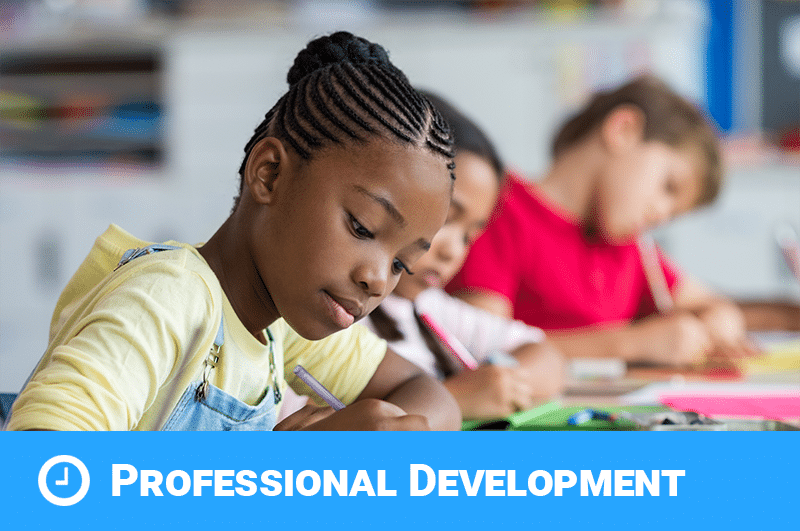
This course teaches you five main types of writing prompts: narrative, creative, expository, persuasive, and reading response as well as a simple structure to follow when designing each type of writing prompt.

This course teaches you five main types of writing prompts: narrative, creative, expository, persuasive, and reading response as well as a simple structure to follow when designing each type of writing prompt.

Learn various strategies for increasing reading and writing fluency with an emphasis on implementing varied activities tailored to specific student levels including grouping, and station activities.

Learn various strategies for increasing reading and writing fluency with an emphasis on implementing varied activities tailored to specific student levels including grouping, and station activities.

This course will teach participants how to establish a classroom culture that is conducive to learning and sharing as well as a variety of ways to check their students’ understanding of elementary math content.

This course will teach participants how to establish a classroom culture that is conducive to learning and sharing as well as a variety of ways to check their students’ understanding of elementary math content.

This course will teach you the different types of assessments, how to design effective and targeted assessment items, and how to build a detailed plan for your content area and grade-level to measure student progress.
In this course, you will learn new strategies for implementing assessments into the classroom and explore various topics to help you use assessments effectively throughout the student learning process.

This course will provide you with all the student templates, graphic organizers, rubrics, worksheets, and examples that you need to build a CER science lesson, and teach the CER process in your science classroom.

This course will provide you with all the student templates, graphic organizers, rubrics, worksheets, and examples that you need to build a CER science lesson, and teach the CER process in your science classroom.
This Quick Course will provide simple-to-implement ideas for enhancing creativity in your classroom, designed with your gifted students in mind. You’ll explore some challenges gifted students face and how you can support their creativity with simple activities that can be incorporated into your regular lessons.
This course will provide simple-to-implement ideas for enhancing creativity in your classroom, designed with your gifted students in mind. You’ll explore the challenges gifted students face and how you can support their creativity with simple activities that can be incorporated into your lessons.

This quick course will help you plan for the design of a strong substitute teacher folder so that in the event of your absence, your substitute teacher can successfully deliver lessons. STRONG sub folder components are defined, with guidance on how to successfully plan for your absence.

This quick course will help you plan for the design of a strong substitute teacher folder so that in the event of your absence, your substitute teacher can successfully deliver lessons. STRONG sub folder components are defined, with guidance on how to successfully plan for your absence.